Showing posts with label Supercars. Show all posts
Showing posts with label Supercars. Show all posts
Friday, November 20, 2009
2010 Bentley Continental Supersports Car is a twin-turbocharged, 6.0 litre W12 engine the fastest, most extreme Bentley ever
2010 Bentley Continental Supersports Car The Bentley Continental Supersports is the first Bentley model to be designed with some thought given to the environment. Bentleys will never be the most economical or environmentally friendly of vehicles but at least they're recognizing the fact that times are changing.The Continental Supersports began as an 'under the radar' project exploring the

Wednesday, November 18, 2009
2010 Bentley Continental GTC Speed The Super Sports Car 600bhp, 6-litre, twin-turbocharged W12 engine.
2010 Bentley Continental GTC Speed Introduction of the new Bentley Continental GTC range builds on this success with a subtle evolution of its distinctive style and a range of technical and feature enhancements benefiting comfort and customer choice. The appeal of the GTC is further strengthened by the addition of the new 600bhp (610PS) Bentley Continental GTC Speed model. It is Bentley's most
Thursday, October 15, 2009
Yamaha OX99-11 Supercar 3498 cc V12

Yamaha OX99-11 Supercar 3498 cc V12
Yamaha initially approached a German company to come up with some designs for the supercar. However Yamaha dismissed the proposals as they were considered to similar to existing supercars. IAD were at this point hired to continue work on the project. In 1992 IAD came with an initial version of the OX99-11.
The Yamaha OX99-11 was a supspercar designed by IAD, an English engineering consultancy, and Yamaha subsidiary Yilon Technology.
While the Yamaha OX99-11 was originally slated to appear in 1994, the roots of the OX99-11 project began in 1989 when Yamaha began competing in Formula One, later this spawned the desire to create a supercar based on Formula One technology.
Despite the fact the Formula One team was less than competitive, a new engine called the OX99 appeared in 1991, helping to give the new car a name.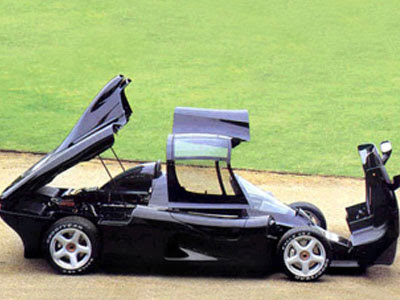
The new car featured an unusual and somewhat ugly design, features like the prominent front spoiler, tandem seating, cockpit shaped roof and protruding engine scoop stood out from other vehicles. Other features of the car which were rather extreme included the carbon fiber chassis and OX99 engine which were borrowed from the F1 car.
Budget disagreements meant the Yamaha OX99-11 project was taken from IAD and handed over to Ypsilon Technology, who were given 6 months to finish the project. A further blow to the project was came in the form of a financial crisis which hit Japan and it was decided that there wouldn't be enough buyers capable of handing over the vast sums of money needed to buy the car. In 1994 the Yamaha OX99-11 project was axed. By this point only 3 prototypes had been constructed.
The Yamaha OX99-11 was a supspercar designed by IAD, an English engineering consultancy, and Yamaha subsidiary Yilon Technology.
While the Yamaha OX99-11 was originally slated to appear in 1994, the roots of the OX99-11 project began in 1989 when Yamaha began competing in Formula One, later this spawned the desire to create a supercar based on Formula One technology.
Despite the fact the Formula One team was less than competitive, a new engine called the OX99 appeared in 1991, helping to give the new car a name.

Yamaha OX99-11 Supercar 3498 cc V12
The new car featured an unusual and somewhat ugly design, features like the prominent front spoiler, tandem seating, cockpit shaped roof and protruding engine scoop stood out from other vehicles. Other features of the car which were rather extreme included the carbon fiber chassis and OX99 engine which were borrowed from the F1 car.
Budget disagreements meant the Yamaha OX99-11 project was taken from IAD and handed over to Ypsilon Technology, who were given 6 months to finish the project. A further blow to the project was came in the form of a financial crisis which hit Japan and it was decided that there wouldn't be enough buyers capable of handing over the vast sums of money needed to buy the car. In 1994 the Yamaha OX99-11 project was axed. By this point only 3 prototypes had been constructed.
Yamaha OX99-11 Supercar 3498 cc V12
Yamaha OX99-11 Supercar 3498 cc V12
Yamaha initially approached a German company to come up with some designs for the supercar. However Yamaha dismissed the proposals as they were considered to similar to existing supercars. IAD were at this point hired to continue work on the project. In 1992 IAD came with an initial version of the OX99-11.
The Yamaha OX99-11 was a supspercar designed by IAD, an English engineering consultancy, and Yamaha subsidiary Yilon Technology.
While the Yamaha OX99-11 was originally slated to appear in 1994, the roots of the OX99-11 project began in 1989 when Yamaha began competing in Formula One, later this spawned the desire to create a supercar based on Formula One technology.
Despite the fact the Formula One team was less than competitive, a new engine called the OX99 appeared in 1991, helping to give the new car a name.
The new car featured an unusual and somewhat ugly design, features like the prominent front spoiler, tandem seating, cockpit shaped roof and protruding engine scoop stood out from other vehicles. Other features of the car which were rather extreme included the carbon fiber chassis and OX99 engine which were borrowed from the F1 car.
Budget disagreements meant the Yamaha OX99-11 project was taken from IAD and handed over to Ypsilon Technology, who were given 6 months to finish the project. A further blow to the project was came in the form of a financial crisis which hit Japan and it was decided that there wouldn't be enough buyers capable of handing over the vast sums of money needed to buy the car. In 1994 the Yamaha OX99-11 project was axed. By this point only 3 prototypes had been constructed.
The Yamaha OX99-11 was a supspercar designed by IAD, an English engineering consultancy, and Yamaha subsidiary Yilon Technology.
While the Yamaha OX99-11 was originally slated to appear in 1994, the roots of the OX99-11 project began in 1989 when Yamaha began competing in Formula One, later this spawned the desire to create a supercar based on Formula One technology.
Despite the fact the Formula One team was less than competitive, a new engine called the OX99 appeared in 1991, helping to give the new car a name.
Yamaha OX99-11 Supercar 3498 cc V12
The new car featured an unusual and somewhat ugly design, features like the prominent front spoiler, tandem seating, cockpit shaped roof and protruding engine scoop stood out from other vehicles. Other features of the car which were rather extreme included the carbon fiber chassis and OX99 engine which were borrowed from the F1 car.
Budget disagreements meant the Yamaha OX99-11 project was taken from IAD and handed over to Ypsilon Technology, who were given 6 months to finish the project. A further blow to the project was came in the form of a financial crisis which hit Japan and it was decided that there wouldn't be enough buyers capable of handing over the vast sums of money needed to buy the car. In 1994 the Yamaha OX99-11 project was axed. By this point only 3 prototypes had been constructed.
Sunday, October 11, 2009
A10 Ascari sports car V-8 engine

A10 Ascari sports car V-8 engine
The Ascari A10 lightweight carbon fiber body of less than 3,000 pounds is designed more for the racetrack than the road. There were only a few models of this fast car built, somewhere between 10 and 50, and although expensive, it promises incredible speed and power.The Ascari A10 sports car, developed by British manufacturers and similar to the Spanish GT version, is rated in the top ten supercars for 2006.
The power of the Ascari A10 comes from the modified BMW 5.0 liter V-8 engine, with the standard six-speed sequential transaxle, where the gearshifts operate as paddles, similar to other race cars. Additions and modifications to the engine, however, include cams with advanced timing, new rods, and pistons, as well as a dry sump lubrication system. It has the same steel sub-frame for the power train and rear suspension as the KZ1 sports car, but the height of the coil spring units can be adjusted hydraulically on front and rear. This is a unique feature, not found on most other supercars, where adjustments can only be made manually. Handling should be easier than before, with front and rear anti-roll bars installed, which are also adjustable. The builders of the A10, not to be outdone by their competitors and to ensure adequate braking at such high speeds, have installed ventilated ceramic disc brakes, with 6-pot calipers on the front and 4-pot calipers on the rear.
Ascari A10 rear view image
The exterior design of this luxury race car is more dramatic than its predecessor the KZ1, with wider headlamps, a different grille, and higher wheel arches to accommodate larger rear tires. In addition, it features a splitter in the front, fixed rear wing, and five detachable body panels for added race trace utility. Even with standard features such as a battery isolator, rollover cage, electric windows, and air conditioning, it still weighs 55 pounds less than the KZ1.
Klaas Zwart, the owner of Ascari, may well have designed the fastest exotic car in the UK, outperforming the Ferrari Enzo as is claimed. The A10 is certainly a rare and distinctive car, one that is much desired to own.
A10 Ascari sports car V-8 engine
A10 Ascari sports car V-8 engine
The Ascari A10 lightweight carbon fiber body of less than 3,000 pounds is designed more for the racetrack than the road. There were only a few models of this fast car built, somewhere between 10 and 50, and although expensive, it promises incredible speed and power.The Ascari A10 sports car, developed by British manufacturers and similar to the Spanish GT version, is rated in the top ten supercars for 2006.
The power of the Ascari A10 comes from the modified BMW 5.0 liter V-8 engine, with the standard six-speed sequential transaxle, where the gearshifts operate as paddles, similar to other race cars. Additions and modifications to the engine, however, include cams with advanced timing, new rods, and pistons, as well as a dry sump lubrication system. It has the same steel sub-frame for the power train and rear suspension as the KZ1 sports car, but the height of the coil spring units can be adjusted hydraulically on front and rear. This is a unique feature, not found on most other supercars, where adjustments can only be made manually. Handling should be easier than before, with front and rear anti-roll bars installed, which are also adjustable. The builders of the A10, not to be outdone by their competitors and to ensure adequate braking at such high speeds, have installed ventilated ceramic disc brakes, with 6-pot calipers on the front and 4-pot calipers on the rear.
Ascari A10 rear view image
The exterior design of this luxury race car is more dramatic than its predecessor the KZ1, with wider headlamps, a different grille, and higher wheel arches to accommodate larger rear tires. In addition, it features a splitter in the front, fixed rear wing, and five detachable body panels for added race trace utility. Even with standard features such as a battery isolator, rollover cage, electric windows, and air conditioning, it still weighs 55 pounds less than the KZ1.
Klaas Zwart, the owner of Ascari, may well have designed the fastest exotic car in the UK, outperforming the Ferrari Enzo as is claimed. The A10 is certainly a rare and distinctive car, one that is much desired to own.
Saturday, January 17, 2009
2007 Beck LM 800 Supercar twin turbocharged V8

2007 Beck LM 800 Supercar twin turbocharged V8
The Beck LM 800 is built on the principle of lightweight and aerodynamic efficiency. It uses composite materials to to keep the weight down and a form over function styling brief to keep the frontal area and drag coefficient to a minimum.
The LM 800 is a supercar from Beck Engineering & Composites GmbH based in Switzerland. The Beck LM 800 went on show in January 2007 in Vienna.
The construction of the Beck LM 800 is similar to that found in Formula 1 race cars with a carbon, Kevlar and aluminium composite monocoque protecting the driver and passenger, as well as providing a rigid base to attach the engine and transmission mounts and front control arms of the chassis. The LM 800 has an electronically controlled, hydraulic active chassis also influenced by F1 technology, which reacts to telemetry data and helps to keep the car firmly stuck to the road.
The engine is a V8 especially produced by MTM for the Beck LM 800 with a displacement of 4.2 litres and, thanks to two turbochargers, delivers a performance of around 650 HP (variable from 550 - 1000 hp) to the drive shaft. The drive unit is designed in such a way that even acceleration is achieved across the entire range up to a top speed of over 217 mph. The semi-sequential 7-speed gearbox is perfectly coordinated with the Beck LM 800 and reacts instantly to driver input.
The wheels of the Beck LM 800 are specially made and formed from aluminium. An in-built hydraulic jacking system makes tire changes a breeze.
Subscribe to:
Posts (Atom)


